 Service Information
2015 Cadillac SRX |
SRX Service Manual (7563276) |
Document ID: 5142695
Probing Electrical Circuits
Special Tools
EL-35616 Terminal Test Probe Kit
For equivalent regional tools, refer to Special Tools.
Note: Always be sure to reinstall the connector position assurance and terminal position assurance when reconnecting connectors or replacing terminals.
Front probe
Caution: Refer to Test Probe Caution.
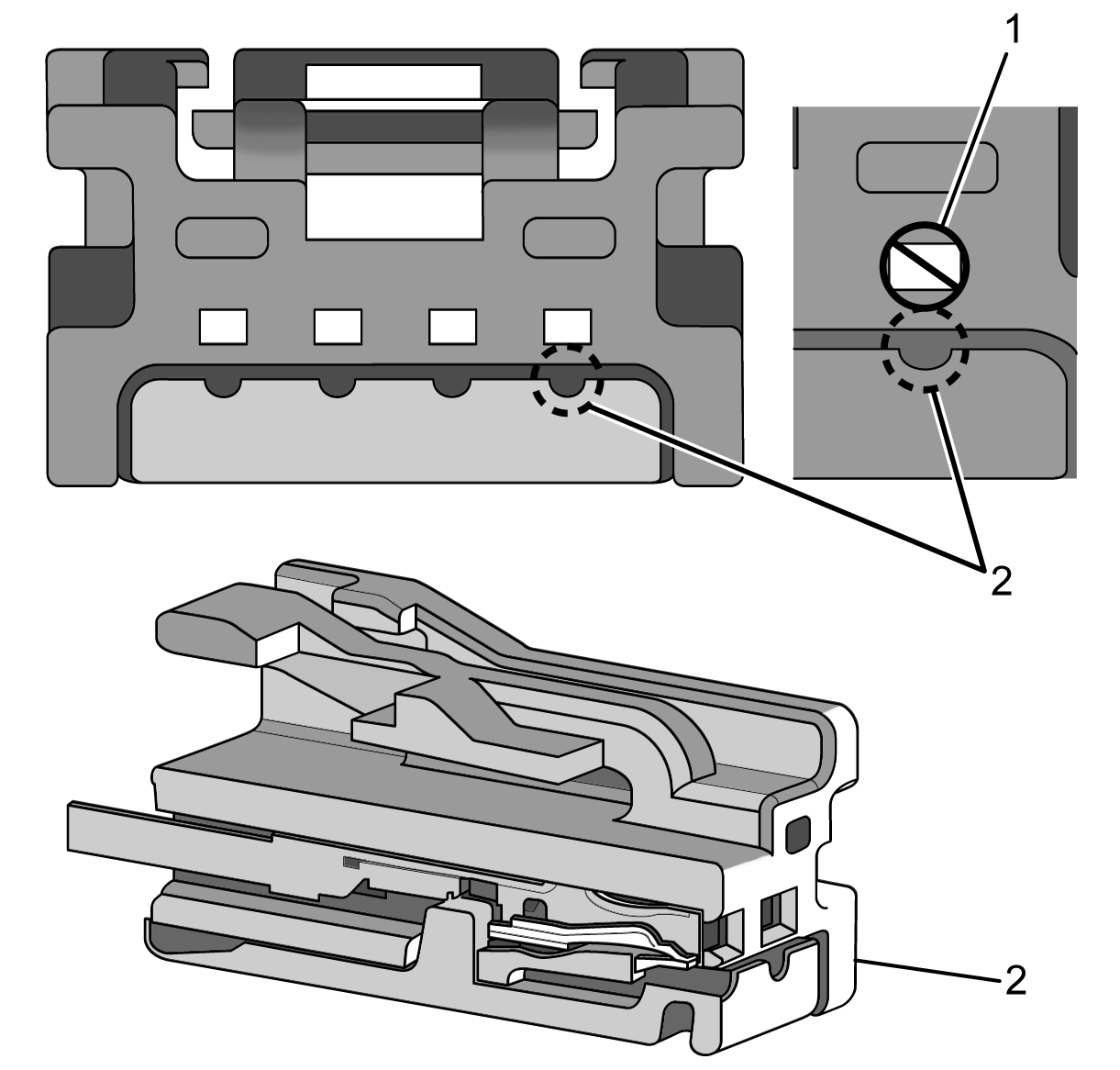
- Connectors with 0.50 terminals should not be probed within the female terminal (1). Damage may occur to the terminal and result in improper diagnosis. There is a test point on the connector (2) next to the terminal where testing should be performed. When checking terminal spread on connectors with 0.50 terminals, use probe tool EL-35616-58 directly into the female terminal (1).
- When probing female 0.64 terminals, it is important to use the correct adapter. There have been some revisions to the test adapter for 0.64 terminals. The proper adapter for 0.64 terminals is the J-35616-64B which has a gold terminal and a black wire between the base and tip. Failure to use the proper test adapter may result in damage to the terminal being tested and improper diagnosis.
- The proper adapter for probing the terminals for fuses, relays, or diodes in an electrical center is J-35616-35. Using any other tool or adapter may damage the terminal being tested.
- Disconnect the electrical connector.
- Insert the appropriate test adapter straight into the terminal on the mating side (front) of the connector.
Refer to the appropriate Connector End View to determine the correct test adapter for front probing terminals.
Note:
Back probe
- DO NOT back probe sealed connectors. Only back probe non-sealed connectors.
- Only use the back–pinning probe set CH-51450-LEAD to back probe 0.64 terminals or larger. Do not back probe 0.50 terminals.
- Only back probe connector terminals when specifically instructed in diagnostic procedures.
- After back probing any connector, inspect for terminal damage. If terminal damage is suspected, test for proper terminal contact.
- Disconnect the electrical connector that will be back probed. This allows increased maneuverability of the connector when inserting the back probe test lead and will help reduce the opportunity for damage.
- Insert the back probe test lead into the back of the terminal, between the terminal and connector body.
- Measure the resistance between the back probe test lead and the corresponding terminal on the front of the connector to ensure a good connection was made. If excessive resistance is found, reposition the back probe test lead to ensure good contact between the back probe test lead and the terminal.
- Connect the electrical connector with the back probe test lead installed and continue diagnosis.
Note: