 Service Information
The GM global coaxial (coax) cable repair strategy uses coaxial cables, connectors and jumpers to repair coaxial cables. The intent is to install the new service cable in vehicle, but removal of the old cable is not necessary. There are several repair scenarios:
- New cables, jumpers, and connector housing are required.
- Only new cables are required while it is possible to reuse the existing connector housing in vehicle. A jumper may or may not be needed.
- Only new connector housing are required, while it is possible to reuse the existing cable in the vehicle.
- A new cable would need to be installed from source to destination and by-pass the inline connector in some cases when an inline connector is unrepairable (Example: a cracked male end of a 1-way connector).
Coaxial Cable Kits
Different kits will be available to repair coaxial cables. Refer to Bulletin 17-NA-346 for Coaxial Cable Kit part numbers.
Connector Housing Repair Procedure
The connector housings (available in Digital Radio, Mobile Telephone and Vehicle Locator Antenna Coaxial Cable Kit) are available for 1-way housings, 2-way housings and 3-way housings. Determine the connector housing required:
1-way housing
No change to the service coaxial cable is necessary in order to install the new coaxial cable into the vehicle.
2-way housing
A 4-inch jumper is required.
- Determine the appropriate generation (1, 2, or 3) and/or size (12.7mm or 8mm) of the 2-way housing that is in the vehicle.
- Remove the faulty/damaged coaxial cable from the 2-way connector housing by removing the terminal position assurance (TPA) from the connector housing and then slide the cable out of the connector.
- Install the new service coaxial cable into the vehicle. Use the 4-inch jumper for the appropriate 2-way connector housing to connect the new service coaxial cable to the connector housing.
- If the issue is found to be the connector housing and not cable, a new connector housing may be installed while reusing all other components.
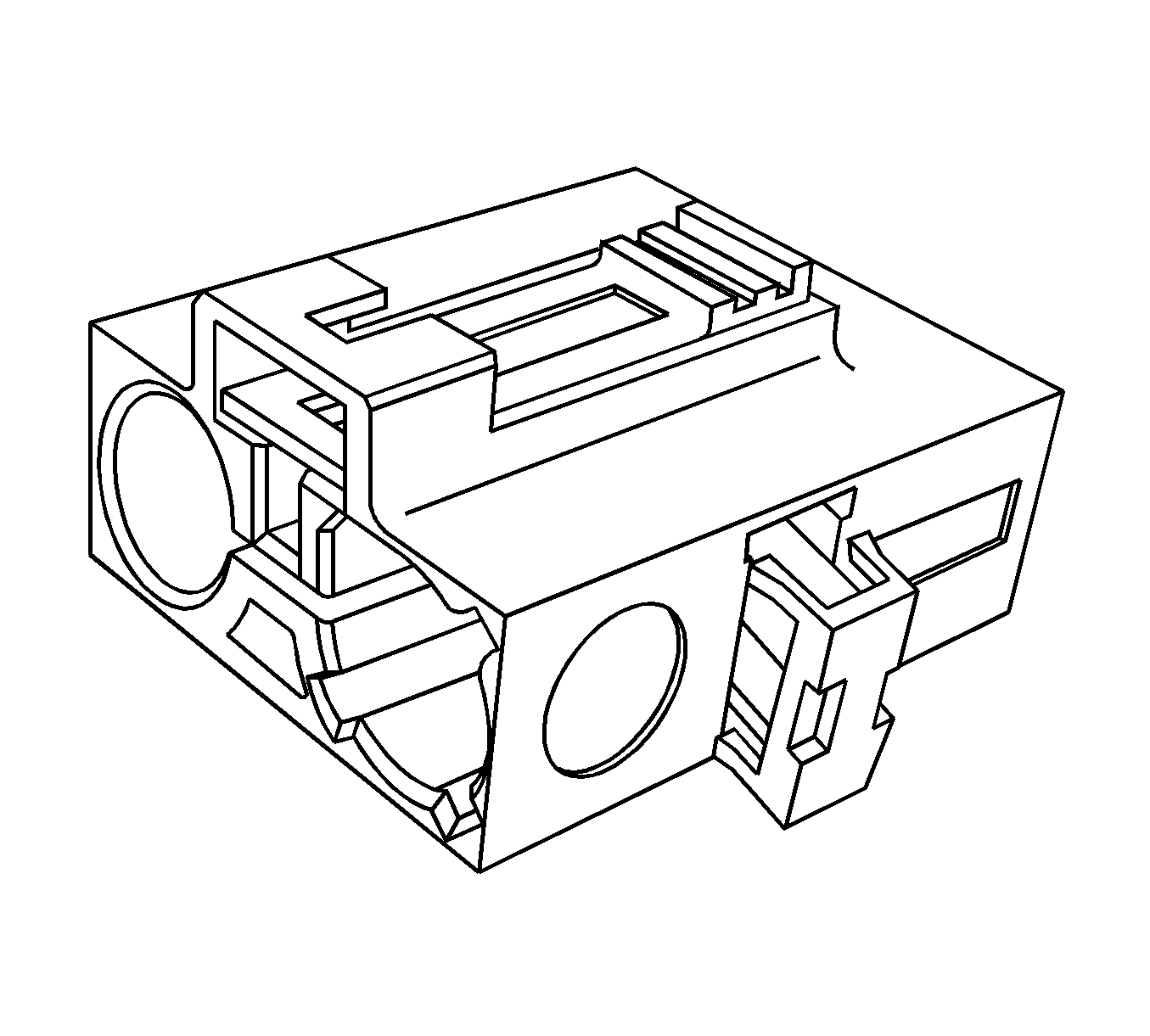
3-way housing
A 4-inch jumper is required.
- Determine the appropriate generation (1 or 2) and keyed 3-way connector housing based on the connector housing color.
- Note the locations of each of the cables in 3-way housing, as it is important for new cables be placed in the appropriate terminal location in the new connector. The connector housing colors are not interchangeable.
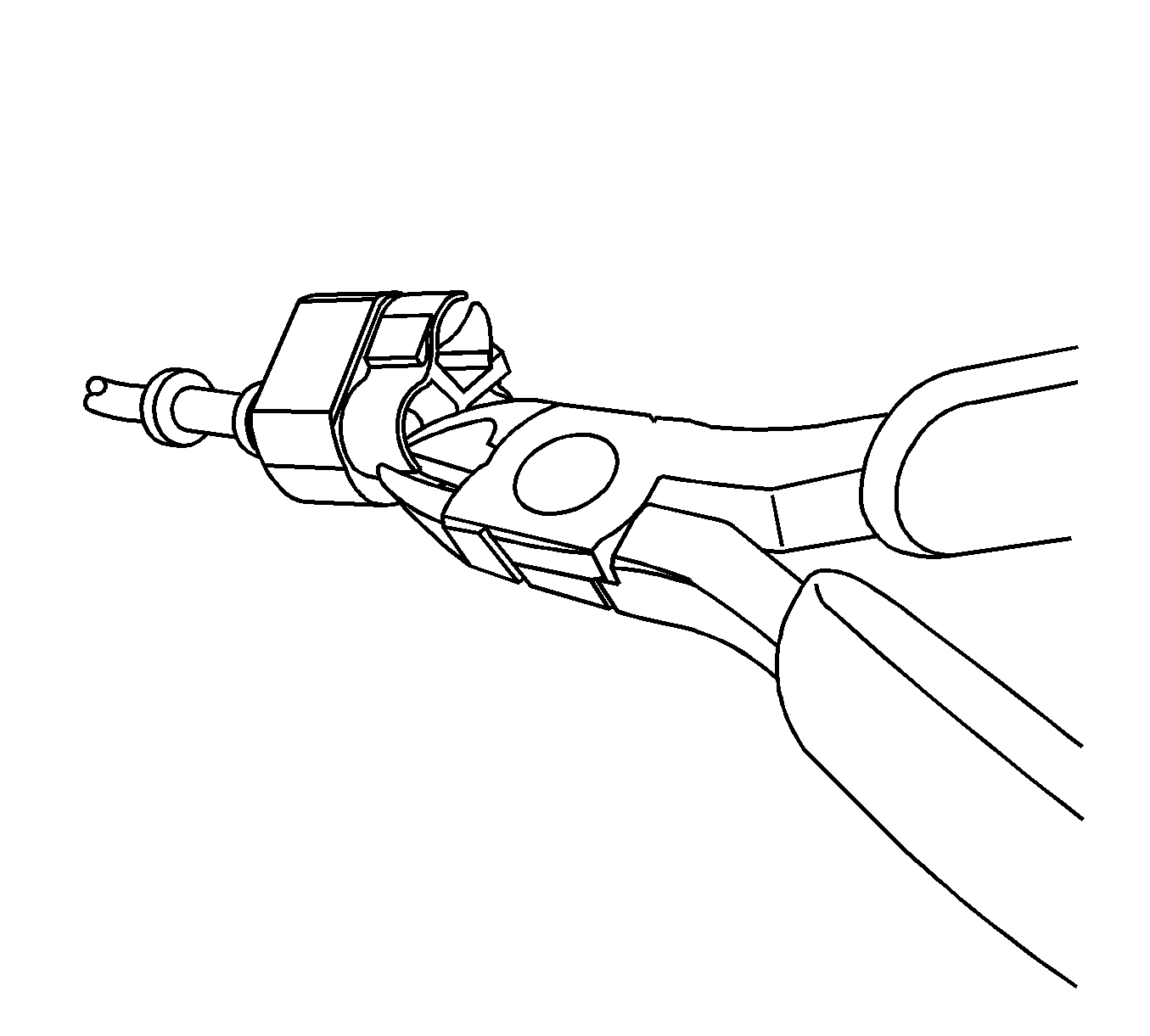
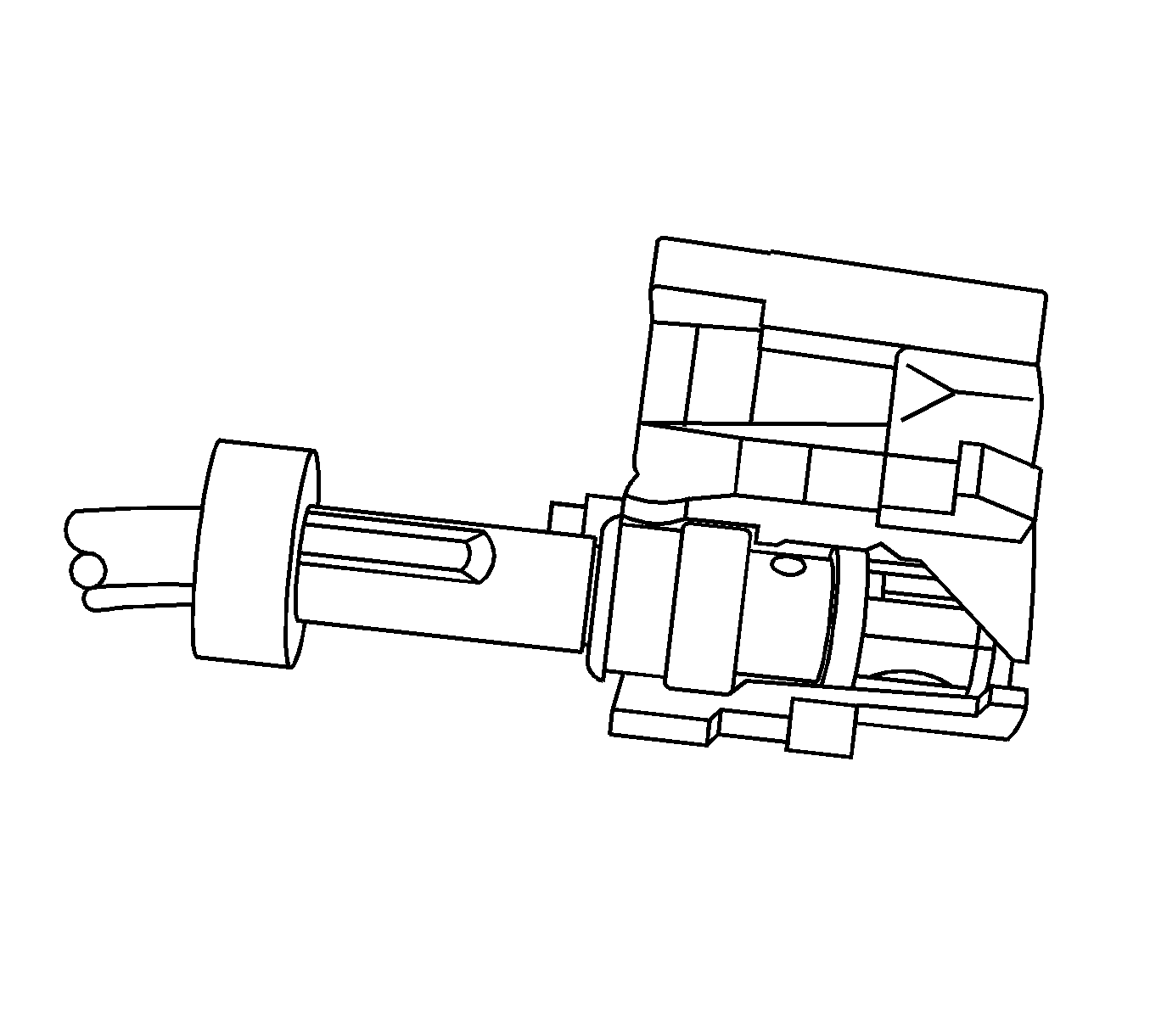
- Remove the faulty/damaged coaxial cable from the 3-way connector housing by using a pair of side/diagonal cutters to nip and break away the housing.
- Use caution not to damage the conductive ends of the coaxial cables inside the connector housing. Do not bend or force the terminal out or it could be damaged.
- Install the new service coaxial cable into the vehicle. Use the 4-inch jumper for the appropriate color 3-way connector housing to connect the new service coaxial cable to the new 3-way connector housing.
- If the issue is found to be the connector housing and not cable, a new connector housing may be installed while reusing all other components.
Coaxial Cable Repair Procedure
- Identify the faulty/damaged coaxial cable.
- Disconnect the faulty/damaged coaxial cable and leave it in the vehicle.
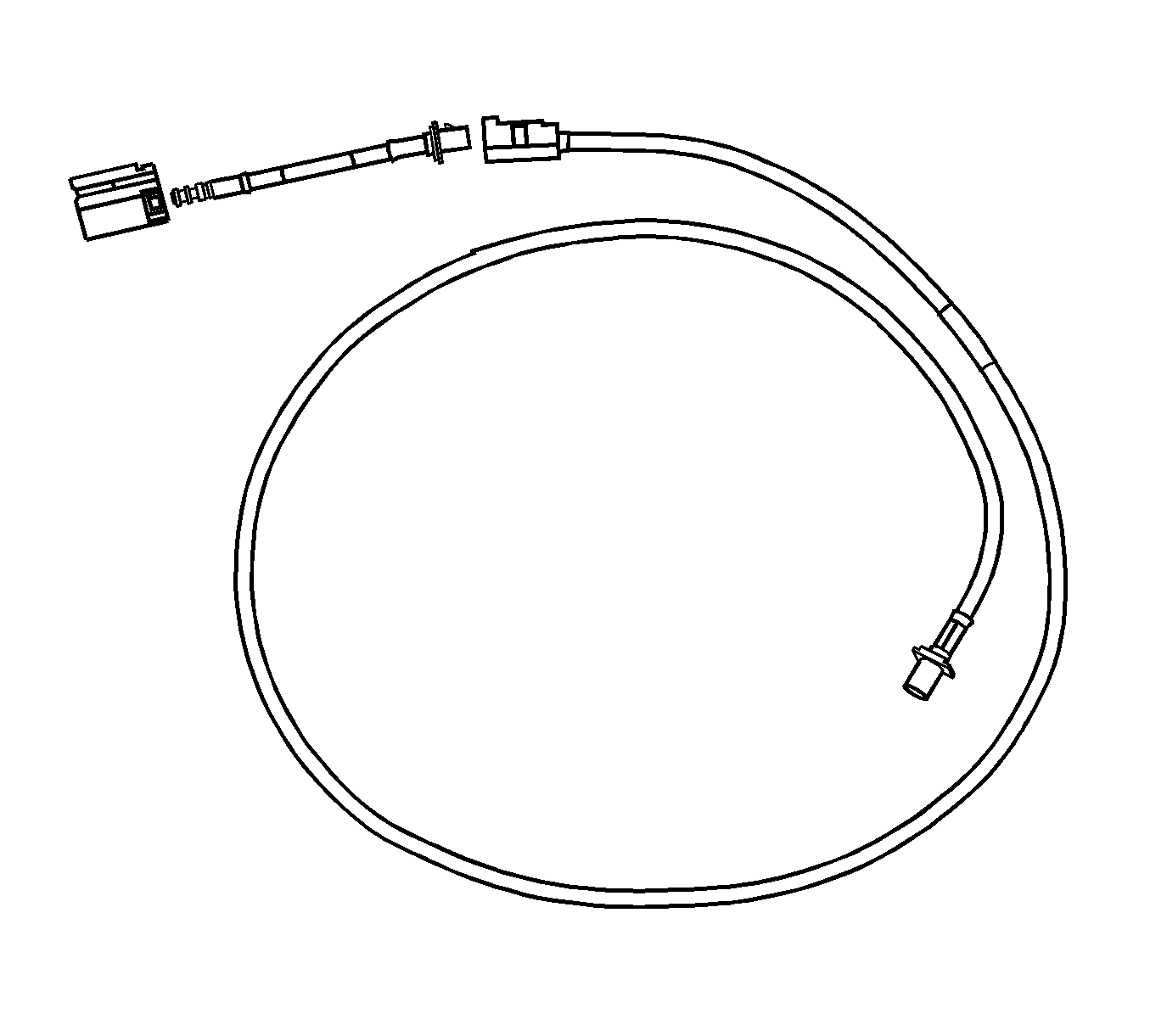
- Identify the type of coaxial cable to be replaced and match up with the appropriate pieces to repair the damaged coaxial cable. Match up the type of coaxial cable, cable length and connector types. In some cases there may be extra length of cable left over.
- Install the new coaxial cable in the vehicle.
- Avoid routing the new coaxial cable near sharp edges that can damage the new coaxial cable.
- In some instances, it may be necessary to pass the new coaxial cable through the dash panel harness grommet:
- If the dash panel grommet has a service port nipple, cut or pierce a small hole in the nipple. With the assistance of a fishing tool, insert the coaxial cable through the hole created in the nipple and pull the coaxial cable through the grommet and into the vehicle interior. Seal the nipple with an appropriate sealant to prevent moisture and noise intrusion into the vehicle interior.
- If the dash panel grommet does not have a service port nipple, cut or pierce a small hole in the grommet with a suitable tool such as a small drill bit. With the assistance of a fishing tool, insert the coaxial cable through the hole created in the grommet and pull the coaxial cable through the grommet and into the vehicle interior. Seal the hole with an appropriate sealant to prevent moisture and noise intrusion into the vehicle interior.
- Use tie-straps to attach the new service coaxial cable to existing harnesses or brackets. Use felt tape/foam to reduce rattles, as necessary.
- Remove the faulty/damaged connectors, if applicable.
- Install new connectors or jumpers, as needed. Refer to Connector Housing Repair Procedure.
- Verify the repair by operating the system with the engine running.
Note:
Note: To avoid permanent damage, do not pinch the cable or bend it tighter than a 2 inch (5 centimeter) radius.